
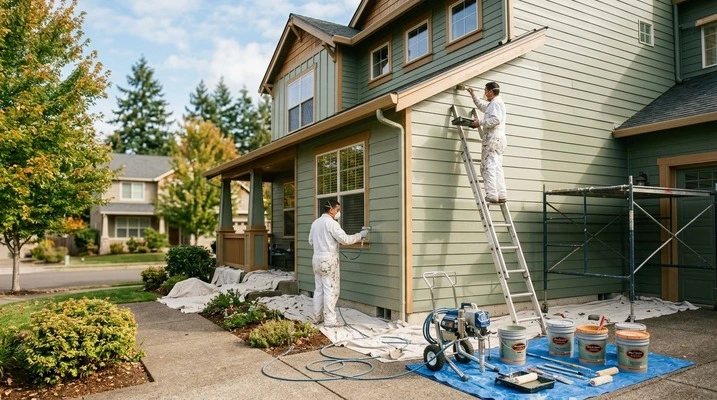
Late spring through early fall, roughly May to early October, is the best window to paint a house exterior in Oregon. During these months the Willamette Valley and Portland metro area, including Gresham, see the driest stretches of the year and daytime temperatures that sit comfortably in the 50 to 85 degree range most paint manufacturers require for proper curing.
That single sentence answers the question. But “best season” only gets you so far when you’re actually trying to book a project, coordinate a crew, or figure out why your painter keeps rescheduling. Oregon’s weather doesn’t move in clean three month blocks, it shifts week to week, and some months that look fine on paper are actually risky for paint. So let’s go through the calendar one month at a time and look at what’s really happening.
Why Timing Matters More in Oregon Than Most Places
Paint isn’t just about looks. It’s a chemical process. Latex and acrylic paints need warm enough air for the water in the formula to evaporate at the right pace, and they need dry enough surfaces for the paint film to bond to the siding instead of trapping moisture underneath. Two things make Oregon trickier than a lot of other states.
First, the rain. The Portland metro area gets close to three feet of rain a year, and most of it falls between late October and April. Painting over damp siding, or right before a storm rolls in, is one of the fastest ways to get peeling, bubbling, or mildew under the surface within a year.
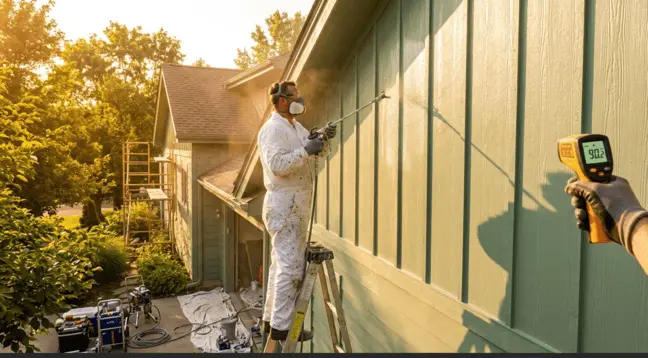
Second, the temperature swing. Willamette Valley summers can spike into the 90s, which sounds harmless but actually causes paint to dry too fast on the surface while it’s still wet underneath, leading to lap marks and poor adhesion. So the goal isn’t just “avoid the rain,” it’s finding the stretch where temperature and dryness line up together.
January
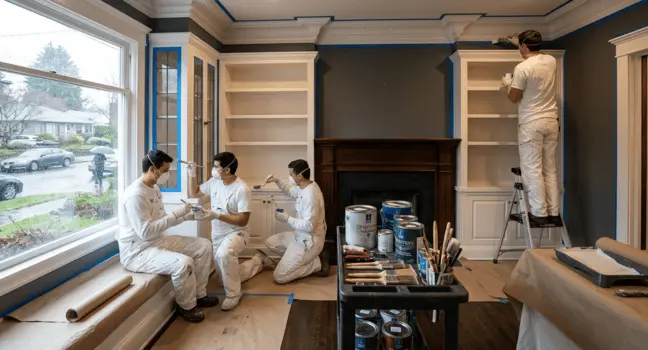
Not recommended for exterior painting. January is deep in the rainy season with average highs in the low to mid 40s and frequent overnight temperatures near or below freezing. Paint applied in these conditions will not cure correctly no matter how careful the crew is. This is a strong month for interior painting instead, since your painters aren’t weather dependent indoors.
February
Still off the table for most exterior work. Rainfall stays high and daytime temperatures usually hover in the mid 40s to low 50s. Occasional dry breaks happen, but they’re too unpredictable to plan a full exterior project around. Cabinet painting, trim work, and drywall repairs are a better use of this month.
March
Early transition month. Temperatures start climbing into the mid 50s, but Oregon’s spring rain doesn’t let up easily, and this is often one of the wetter months of the entire year in parts of the metro area. A skilled crew can sometimes catch dry windows for small sections, but a full exterior repaint is risky to schedule this early.
April
Conditions start improving. Average highs reach the upper 50s to low 60s, and dry stretches become more frequent, though rain showers are still common enough that scheduling flexibility matters. This is a good month to book your estimate and get on a painter’s calendar even if the actual painting happens a few weeks later.
May
The unofficial start of exterior painting season. Temperatures climb into the mid 60s, rainfall drops noticeably compared to winter and early spring, and the days are long enough to give crews a full working window. Many Gresham and Portland area painters see their schedules fill up fast once May arrives, so booking early in the month is smart.
June
One of the strongest months of the year for exterior painting. Highs typically sit in the low 70s, humidity is manageable, and rain becomes far less frequent. Paint applied in June has excellent conditions to cure fully before any weather stress hits it.
July
The driest month of the year in the Portland metro area, with rainfall often under an inch for the entire month. Temperatures average in the high 70s to low 80s. The only caution here is on days when the mercury pushes past 85 or 90, since painting in direct afternoon sun during a heat spike can cause the paint to dry unevenly. Scheduling work for morning or shaded sides of the house solves this.
August
Just as dry as July and often just as warm, sometimes warmer. This is peak painting season across the region, which also means it’s peak demand, so if you want August, plan your estimate months in advance.
September
Still an excellent month. Temperatures ease slightly into the low to mid 70s, rain stays minimal through most of the month, and the lighting is actually gentler than the harsh July and August sun, which some painters prefer for even application. Early fall is genuinely underrated compared to summer.
October
The last reliable stretch of the season, but it needs to be handled with more attention. Early October often still offers good painting days, but by mid to late October the rainy season typically returns and daylight hours shrink. Projects booked for October should ideally be finished by the third week to leave a safety margin.
November
Exterior painting is not advisable. Rain increases sharply, average highs drop into the low 50s, and overnight lows start flirting with the 30s. This is the point in the year to shift attention indoors.
December
The wettest and coldest stretch of the calendar, similar to January. Exterior work should be avoided entirely. This is a great time to tackle interior repaints, cabinet refinishing, or drywall projects before the holidays or as a new year refresh.
Quick Reference Table
| Season | Months | Exterior Painting Outlook |
| Prime window | May through September | Ideal temperature and lowest rainfall |
| Shoulder window | April, early October | Workable with careful scheduling |
| Off season | November through March | Interior projects recommended instead |
Factors That Matter Beyond the Calendar
The month by month guide above covers average conditions, but a few other things shift the equation for any specific house.
Sun exposure. A south facing wall dries and cures differently than a north facing wall in shade, sometimes by several degrees of effective surface temperature, which matters on borderline days in April or October.
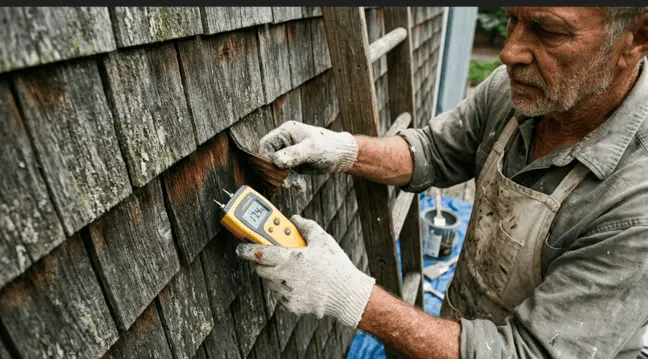
Siding material. Wood siding is more sensitive to moisture than fiber cement or vinyl, so homes with older wood siding benefit from staying closer to the July through September window rather than pushing the shoulder months.
Paint type. Some modern acrylic formulas are rated for cooler temperatures than traditional latex paint, which can widen the practical window slightly. A professional painter will know which product makes sense for your specific timeline.
Dew point, not just temperature. Even on a warm day, a heavy morning dew or high humidity can leave siding damp well into the late morning. Experienced crews check dew point and surface moisture before starting, not just the forecast high.
Make the Off Season Productive
Just because November through March isn’t exterior painting weather doesn’t mean your home improvement plans have to stall. This stretch of the year is actually the smart time to book interior painting, cabinet and built in painting, drywall repair, or color consultation work, since none of it depends on the weather outside. Many homeowners use the rainy months to plan their exterior color scheme so they’re ready to move fast the moment May arrives.
Frequently Asked Questions
What is the best month to paint a house exterior in Oregon?
July and August are generally the most reliable months, offering the lowest rainfall and the most stable temperatures across the Portland metro area, including Gresham.
Can you paint a house exterior in Oregon during the winter?
It’s not recommended. Cold temperatures prevent paint from curing properly, and frequent winter rain interferes with adhesion. Winter is better suited to interior painting projects.
Is it too late to paint by October?
Early October is usually still workable, but conditions become less predictable as the month progresses. Projects should ideally wrap up before the rainy season fully arrives in late October.
What temperature is too hot to paint a house exterior?
Once temperatures push past 85 to 90 degrees, especially in direct sun, paint can dry too quickly on the surface, leading to uneven finish and poor adhesion. Painting in early morning or on shaded walls during hot spells helps avoid this.
Does the type of siding affect the best time to paint?
Yes. Wood siding is more moisture sensitive than fiber cement or vinyl, so it benefits from staying within the driest part of the season rather than stretching into the shoulder months.
Ready to Book Your Exterior Painting Project
Timing your exterior paint job right is one of the biggest factors in how long it lasts. If you’re planning ahead for this year’s painting season, or you’d rather use the rainy months for an interior refresh, Prestigious Painting handles both interior and exterior painting, along with drywall, flooring, and pressure washing, across the Gresham and greater Portland area. Reach out for a free estimate and we’ll help you find the right window for your project.