
Gresham’s wet winters damage exterior paint by trapping moisture behind the paint film, which breaks the bond between paint and siding and leads to blistering, peeling, and mildew growth. Because Gresham sits at the eastern edge of the Portland metro area near the base of the Cascade foothills, it tends to see slightly higher rainfall and cooler temperatures than downtown Portland, which makes the problem even more pronounced for local homes.
If you’ve owned a home in Gresham for more than a couple of winters, you’ve probably already noticed it. The south facing wall looks fine, but the shaded north side near the fence line has that dull, chalky look, or worse, a section of trim that’s started to bubble. That’s not bad luck. It’s Gresham’s climate doing exactly what Gresham’s climate does. Let’s walk through why it happens and, more importantly, what actually stops it.
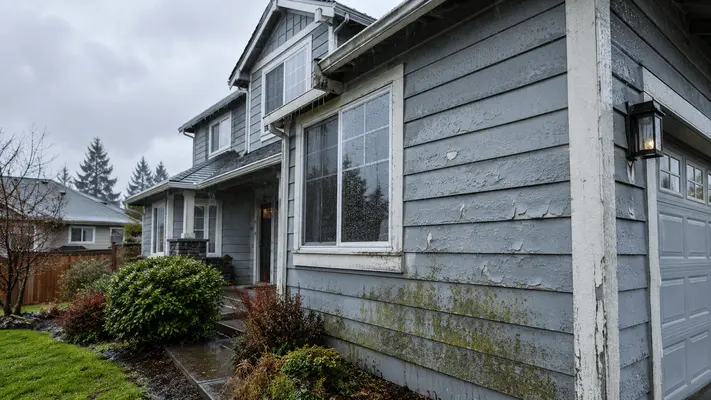
Why Gresham’s Winters Are Especially Hard on Paint
Gresham gets around 40 to 45 inches of rain a year, noticeably more than the roughly 36 inches downtown Portland receives, largely because of its position closer to the foothills. Most of that rain falls between November and April, in the kind of slow, persistent drizzle that doesn’t just wet the surface of your siding, it soaks in and stays there for days at a time.
That distinction matters. A short, heavy downpour is actually less damaging to paint than weeks of low grade dampness, because paint is built to shed water quickly. What it isn’t built for is sitting in contact with moisture for days on end, especially on shaded walls, under eaves, or behind overgrown shrubs where sunlight and airflow rarely reach.
The Damage Process, Step by Step
Paint failure from winter moisture doesn’t happen all at once. It follows a fairly predictable sequence, and understanding it makes prevention a lot more intuitive.
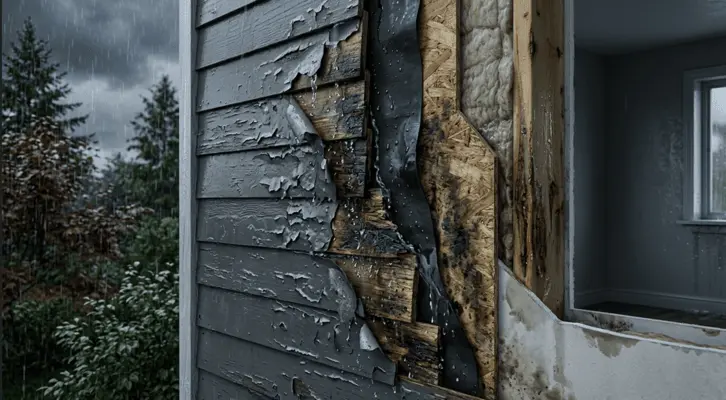
Moisture works its way behind the paint film
Every exterior paint job has microscopic imperfections, tiny cracks near nail heads, hairline gaps at trim joints, or spots where old caulking has started to shrink. During a wet Gresham winter, water finds these openings and works its way underneath the paint layer, especially on wood siding and trim.
Trapped water pushes the paint away from the surface
Once moisture is behind the paint film, it has nowhere to go, since the paint is designed to keep water out, not let it escape from the inside. As that trapped water expands and contracts with temperature changes, it physically pushes the paint away from the wood or siding underneath. This is what creates the bubbling or blistering you sometimes see after a hard winter.
Mildew and algae take hold in the damp, shaded spots
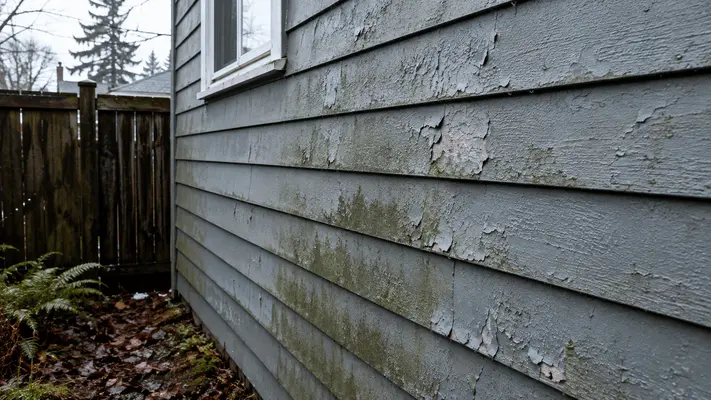
Mildew and algae both need moisture and low light to thrive, and Gresham’s overcast winter skies combined with tree cover in many neighborhoods create exactly that environment. Dark streaking or greenish patches on siding are usually the first visible sign, and if left alone, that organic growth holds even more moisture against the surface, accelerating everything else.
The paint bond weakens and finally lets go
Once adhesion has broken down enough, you get visible peeling, flaking, or cracking. At this stage the paint is no longer protecting the wood underneath, which means the wood itself is exposed to the same moisture cycle, and untreated, that leads to soft spots, rot, and much more expensive repairs than a repaint.
Signs Your Gresham Home Is Already Showing Winter Damage
A few things to check after a rainy season, particularly on north facing walls, under window sills, and around any trim near ground level.
Bubbling or blistered paint, especially in patches rather than one continuous area.
Dark streaks or greenish discoloration, most common in shaded corners or areas close to trees and fences.
Soft or spongy trim when you press on it lightly, which can indicate moisture has already reached the wood.
Cracked or chalky caulking around windows, doors, and where siding panels meet.
Peeling paint that reveals bare wood underneath, particularly on the lower few feet of siding near sprinklers or downspouts.
How to Prevent Winter Moisture Damage
Before winter arrives
Fall is your real prep window, and getting a few things done before the rain settles in makes a measurable difference.
Have your siding inspected for existing cracks, gaps, or failing caulk, since sealing these before the wet season keeps water from ever getting behind the paint in the first place.
Clean gutters and downspouts thoroughly, because overflowing gutters send water directly down exterior walls, which is one of the most common and most preventable causes of localized paint failure.
Trim back any shrubs, vines, or tree branches touching the siding, since that contact traps moisture and blocks the airflow paint needs to dry between rain events.
Recaulk around windows, doors, and trim joints every few years, since caulking is often the first line of defense and the first thing to fail.
During the wet months
Even once winter sets in, a little attention goes a long way.
Walk the exterior after any major storm and look for new water stains, pooling near the foundation, or debris buildup in gutters.
Keep an eye on shaded and low sunlight areas specifically, since that’s where mildew shows up first and where damage tends to progress fastest.
Avoid pressure washing or doing any exterior repair work during active rain, since it can push more moisture into existing gaps rather than clearing it out.
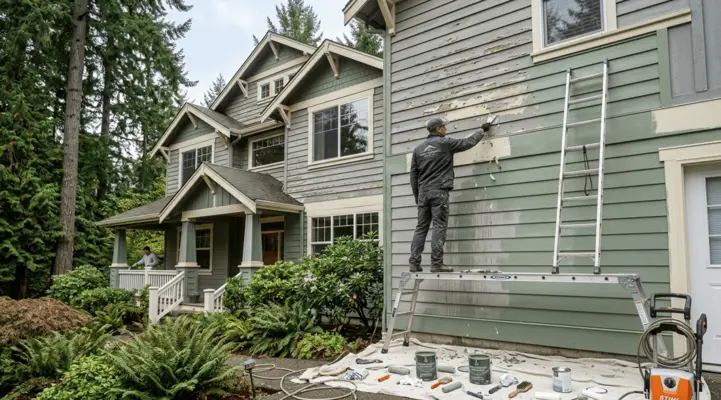
After winter, before the next paint job
Once the rain lets up in spring, this is the moment to assess and act before problems compound through another wet season.
Wash the exterior to remove mildew, algae, and winter grime before it’s painted over or allowed to sit through another summer.
Address any soft wood, cracked caulk, or bubbling paint promptly, since small repairs now are far cheaper than replacing rotted siding later.
Choose paint and primer systems formulated for wet climates, since not every product on the shelf is built to handle repeated moisture exposure the way Gresham requires.
Materials That Hold Up Better in Gresham’s Climate
Not all paint performs equally here, and this is where a lot of Gresham homeowners unknowingly set themselves up for repeat problems.
| Product Type | Why It Matters in Gresham |
|---|---|
| Mildew resistant acrylic paint | Contains additives that actively resist mold and algae growth in shaded, damp conditions |
| Quality exterior primer | Creates a stronger moisture barrier between siding and topcoat, especially on wood |
| Elastomeric or flexible coatings | Expand and contract with temperature swings without cracking, reducing entry points for water |
| Polyurethane or siliconized caulk | Holds up longer against repeated wet and dry cycles than standard latex caulk |
Why Cedar and Older Wood Siding Need Extra Attention
Gresham has plenty of homes with cedar siding or older wood construction, and both are more vulnerable to moisture than fiber cement or vinyl. Cedar in particular can absorb water through its grain, so it typically needs a dedicated primer and coating system rather than a standard one size fits all approach. If your home has original wood siding from decades ago, it’s worth having a painter evaluate its actual moisture content before assuming a simple repaint will solve the problem.
Frequently Asked Questions
Why does exterior paint fail faster in Gresham than in drier climates?
Gresham’s higher rainfall and cooler, shadier winters keep moisture in contact with siding for longer stretches, which weakens paint adhesion and encourages mildew growth more than in drier regions.
Can mildew on exterior paint be cleaned instead of repainted?
Yes, in early stages a mild cleaning solution and proper rinsing can remove surface mildew. Once mildew has been growing for a long time and paint has started to lift, cleaning alone won’t fix the underlying adhesion problem.
How often should exterior paint be redone in Gresham due to the wet climate?
Most Gresham homes need repainting every 7 to 10 years, though homes with heavy shade, tree cover, or older wood siding may need attention closer to the 5 to 7 year mark.
Does caulking really make that much difference?
Yes. Caulking is often the very first point of failure, since even small gaps around trim and windows give winter rain a direct path behind the paint film.
Is it better to paint before or after winter in Gresham?
Painting should be done during the dry season, roughly May through September, so the paint has time to cure fully before it faces its first wet winter.
Protect Your Gresham Home Before the Next Wet Season
Winter moisture damage is largely preventable with the right prep, the right materials, and a bit of seasonal attention. If your Gresham home is already showing signs of peeling, mildew, or soft trim, or if you’d rather get ahead of it before the rain returns, Prestigious Painting offers exterior painting, caulking, and moisture focused prep work built specifically for this climate. Reach out for a free assessment and we’ll walk your property with you.